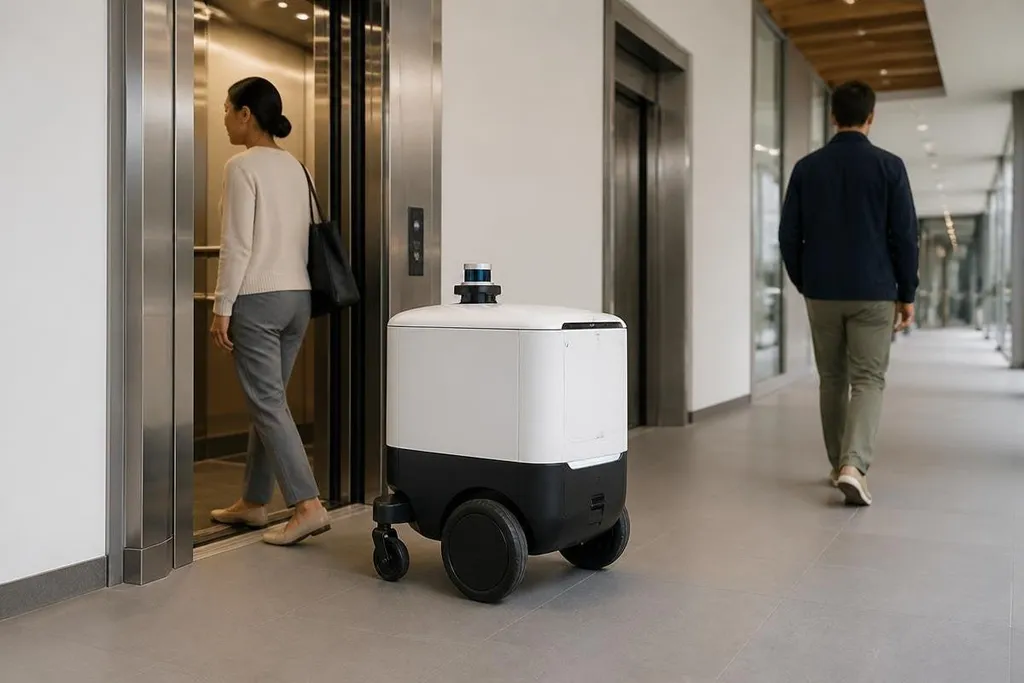
A mobility robot can move through a building, carry an item, or guide a person between places. The harder job starts when the robot reaches a door, a lift, a crowded path, or a person who changes direction without warning.
For the next wave of mobility robots, useful movement will depend on how well the robot senses its surroundings, makes a safe choice, and hands control back to people.
Quick read
- Wheels, legs, and tracks suit different floors, loads, and access needs.
- A route is only useful if the robot can pause, explain a problem, and continue safely.
- Buyers should test the full task, including doors, people, charging, and recovery from faults.
That last point changes how these machines should be judged. A robot that travels well in an empty test area may still struggle in a hospital corridor, a warehouse aisle, or a public building with changing traffic.
Movement is the easy part to describe
Wheeled robots usually use less energy on smooth floors and can carry their hardware close to the ground. Legged robots can handle steps and uneven surfaces, but their balance control gives them more work to do. Tracked robots can move across loose ground, though tight turns may damage floors or limit indoor use.
The right design depends on the task. A delivery robot may need a small turning circle and a covered storage box. An inspection robot may need a camera mast, suspension, or enough clearance to pass under equipment. A mobility aid may need quiet motors and controls that a person can understand without training.
These choices affect more than travel. They set the robot's power use, weight, maintenance needs, and response when something blocks the route.
The handoff is where trust gets tested
A mobility robot needs a clear way to act when its map no longer matches the space. A chair, pallet, open door, or group of people can change the route. The robot may need to stop, choose another path, or ask a person for help.
That request must be specific. “Path blocked” tells an operator more than a generic fault code, while a view from the robot's camera can help them decide what to do. Remote control can move the robot past a problem, but it adds a person to the operating cost and depends on a working network connection.
A mobility robot’s remote handoff changes the test: can an operator guide it past an obstacle and return control safely? Mobility robotics reporting from Robot24.com can tie that answer to the route, network link, operator action, and test date.
A good handoff also includes the return to autonomous operation. The robot should show that the remote instruction ended, confirm its new route, and make its next movement clear to nearby people. Confusion at this point can create a safety problem even when the motors and sensors work as planned.
The missing test is often recovery
Product descriptions tend to focus on travel speed, battery life, payload, or sensor type. Those details matter, but they don't show what happens after a failed route, a low battery warning, a lost network link, or a person stepping into the robot's path.
Recovery needs its own test plan. Operators should record how often a person must intervene, how long the robot stays stopped, and what information appears on the control screen. A short route with repeated stops may cost more than a longer route that the robot completes without help.
I'd judge a mobility robot by its recovery record before its top speed. A machine that moves slowly but explains its problems can be easier to run than one that travels quickly and leaves staff guessing.
The same logic applies to charging. A robot that needs a person to find its charger, connect a cable, and clear a fault may create work that the route plan never counted. Charging points need room, power, and protection from the traffic around them.
A buyer's field checklist
Before a trial, check these points with the exact site and task in view:
- Route limits: doors, lifts, slopes, floor edges, narrow turns, and areas where people gather.
- Load handling: item size, weight, center of mass, and what happens if the load shifts.
- Human control: stop button location, remote access, warning sounds, and screen messages.
- Recovery records: intervention count, stopped time, fault logs, and the steps needed to restart.
- Daily work: charging, cleaning sensors, moving the robot when power fails, and assigning staff to support it.
Run the trial during the hours when the site is busiest. Test the route after furniture, stock, or temporary barriers change. Ask the supplier to state which functions were tested, which needed remote help, and which remain unproven.
Mobility robots will earn wider use when their full work cycle is measured: movement, stopping, human help, charging, and recovery. Until buyers have those records, a polished route demo is only a starting point.